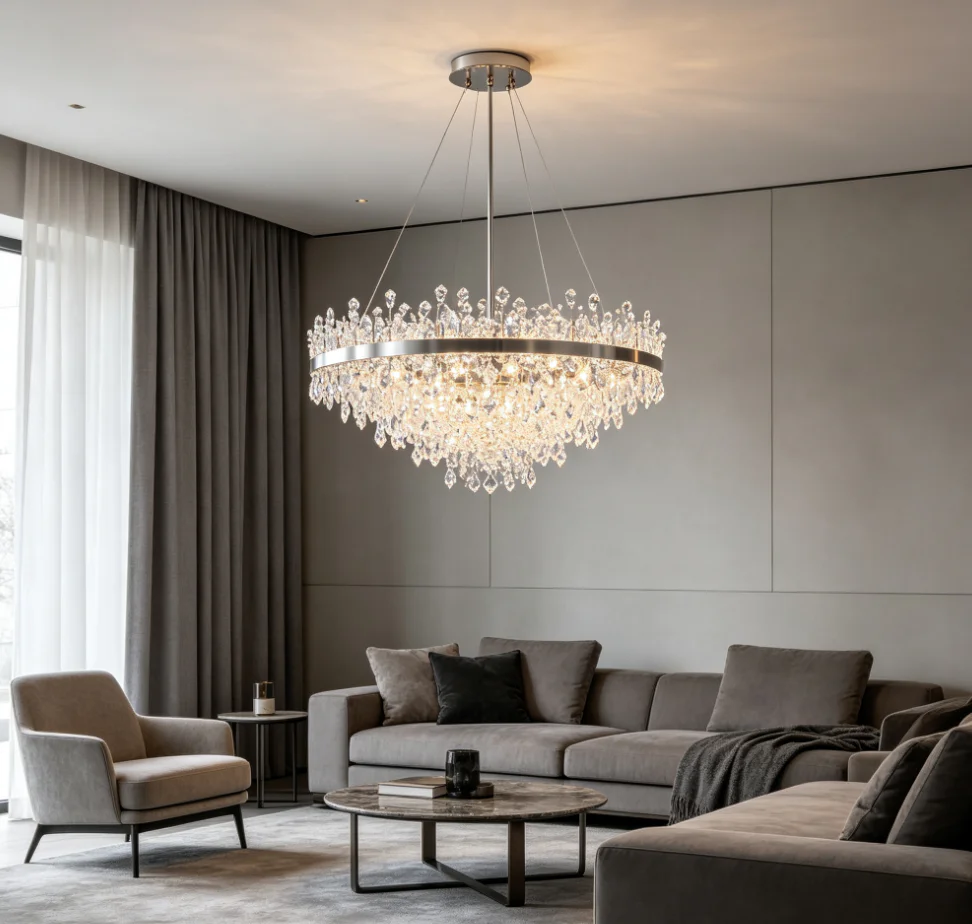
Choosing a Custom Chandelier Manufacturer for a Hotel Lobby or Villa A chandelier can look perfect in a rendering and still become a difficult product once it reaches the building. The shape may be attractive. The materials may match the interior mood. The quotation may even be within budget. But after installation, the fixture hangs too low above the staircase, the light shines into people’s eyes, or the upper section is impossible to clean without bringing in special equipment. This happens because a large chandelier is often treated as a decoration first and part of the building second. For a hotel lobby, banquet hall, villa entrance, or high-ceiling staircase, that order should be reversed. The space decides what the chandelier can become. A large fixture needs more than an attractive shape When a buyer contacts a custom chandelier manufacturer, the discussion often begins with a reference picture. That is understandable. A picture communicates the style quickly, especially when the buyer is looking for a crystal chandelier, ribbon chandelier, ring chandelier, or another sculptural form. It does not show enough information for production. A broad chandelier may look balanced in a hotel lobby because people can view it from a distance. The same design may feel too wide above a dining table or make a villa entrance appear crowded. A long vertical fixture can work beside a staircase, but its drops have to follow the shape of the stairwell. If every part hangs from one level, the result may look stiff rather than connected to the architecture. The ceiling height is only one measurement. I would also look at the floor area, the position of furniture, the main walking routes, the reception desk, doors, sprinklers, and the places from which people will see the fixture. This is particularly important in a hotel lobby. The chandelier should attract attention without blocking the reception area or making the ceiling feel overloaded. In a banquet hall, the fixture may need to look impressive from a distance while leaving enough visual space for guests seated below it. In a villa, there is usually more freedom, but the scale still has to suit the entrance, living room, or staircase. A chandelier that is beautiful on its own can be wrong for the room. Installation access is another matter that tends to appear late. Can the fixture be carried through the entrance? Will it fit in the elevator? Does the installer have enough room to assemble it? Where will the support structure be fixed? If these questions are left until the goods arrive, even a well-made fixture can create delays and extra labor. Material choices affect the daily experience The material is not selected only for its appearance. It changes the weight, light transmission, cleaning work, and packing requirements. Crystal is often chosen when the project needs a formal or luxurious effect. It can work well in hotel lobbies and large entrance spaces, but a crystal chandelier may contain many individual elements. Someone will need to clean those elements later. Someone will also need to protect them during transport and identify them during installation. Glass gives a different impression. It can make a chandelier feel lighter and suit a restaurant, lounge, or villa living room. The final result depends on the transparency, thickness, shape, and position of the glass. A fragile glass form may be suitable for a private interior but less convenient in a busy commercial area where cleaning and accidental contact are more likely. Acrylic is sometimes used when the fixture is very large or has a complicated layered shape. It can help reduce the visual heaviness of the design. It is not a solution for every project, though. The surface needs protection, and the buyer should check how it looks when illuminated rather than judging it only when the lamp is switched off. Marble and alabaster have a softer, more natural character. They can make a pendant or chandelier feel less manufactured, but natural variation should be expected. The pieces may not have identical grain or tone. That is not necessarily a defect, but it should be understood before the sample is approved. Metal finishes can change the atmosphere just as much as the main material. Antique brass, polished brass, copper, black, and brushed finishes all create different reactions beside stone, wood, glass, and wall paint. If the chandelier needs to match furniture handles or other metal details, I would ask for a physical finish sample. The words “gold” and “brass” are too broad to serve as a proper approval reference. The light source itself should not be ignored. A decorative fixture can look calm when it is off and become uncomfortable when switched on. Check whether the bulbs or LED modules are visible from the normal viewing angle. Look for reflections on polished floors and tables. Consider whether the room needs dimming and whether the chosen electrical arrangement is compatible with the project. A drawing should help the people who install the chandelier A custom chandelier drawing should be useful to more than the design team. The factory, buyer, and installer should all be able to understand the same document. The drawing may need to show the total width, overall height, number of tiers, drop lengths, ceiling plate, hanging points, structural connections, material distribution, and the way the fixture will be assembled. A product image cannot provide this information clearly enough. This is especially true for a staircase chandelier. The fixture may contain several drops at different lengths, and their positions need to be agreed before the ceiling work is finished. A small change in one hanging point can affect the whole composition. Electrical details belong in the same conversation. Voltage, light source, driver location, dimming method, wiring, and control requirements should be confirmed before production begins. It is uncomfortable for everyone when the physical fixture is ready but the site is not prepared for its electrical or structural requirements. The sample stage should be handled with the same care. Sometimes a
How to Choose a Lighting Manufacturer in China for Hotel and Villa Projects
A lighting order can look settled long before it is actually ready for production. The drawing has been approved. The designer likes the shape. The buyer has received a quotation. Everyone agrees that the chandelier should be large and the wall lamps should use the same finish. Then someone asks a simple question: How will this be installed? That question can send the discussion back several steps. The ceiling is not as high as expected. The suspension rod is too long. The backplate does not match the junction box. The light source can be seen from the bed. The finish looks slightly different from the metal sample approved earlier. These problems are common in hotel and villa lighting projects because decorative lighting is judged in two different ways. It has to look right, but it also has to work in the room. A lighting manufacturer in China should be selected with both sides in mind. A product photo does not show the whole decision When buyers begin searching for a China lighting manufacturer, they often start with chandeliers because the product is easy to notice. A large chandelier can define a hotel lobby, a staircase, or the entrance hall of a villa. It gives the project a visual identity. The trouble starts when the product is considered separately from the building. A chandelier may have the right diameter in a drawing and still feel too heavy once it is installed above a reception desk. A staircase pendant may have an attractive shape but leave no convenient way to clean the upper sections. A group of pendant lights may look balanced in a rendering, while the actual ceiling structure makes the suspension points difficult to arrange. The room decides more than the catalog does. Hotel guest rooms are a good example. A decorative wall lamp beside the bed needs to sit at a comfortable height. Its light should not shine directly into the guest’s eyes when they are lying down. A visible bulb may create a nice effect in a restaurant, but the same effect can be irritating in a bedroom. The same applies to floor lamps and table lamps. Their size, switch position, cable arrangement, and base shape affect how easily guests can use the room. If a table lamp occupies too much space on a small bedside table, its appearance becomes less important. People will move it, unplug it, or stop using it. Villa lighting gives the designer more freedom, although that freedom can create its own problems. One house may contain a large living-room chandelier, a pendant group above the dining table, wall lamps in the hallway, and a long hanging fixture beside the stairs. These pieces do not have to be identical, but they should not look as if they came from unrelated projects. This is where custom lighting becomes useful. The supplier may need to adjust the size, finish, suspension length, material, or structure while keeping the main design language intact. A standard product may be perfectly suitable for one room and completely wrong for another. The important details usually appear after the design meeting In practice, I pay close attention to the information that tends to be left in emails rather than shown in the main presentation. What is the actual size of the fixture? Which parts are glass, crystal, acrylic, marble, alabaster, brass, copper, iron, or aluminum? Is the finish painted, plated, brushed, polished, or treated in another way? Where is the driver located? Can it be replaced later? Is dimming required? What voltage will the project use? These questions may sound technical, but they affect how the lighting feels and how much work it creates after installation. A glass or crystal chandelier needs careful internal packaging. Small decorative pieces can arrive loose or damaged if the packing method is designed only around the outer carton. Stone materials may have natural variation, so a buyer should understand that the final pieces may not have exactly the same grain or shade as the reference image. Acrylic can help when a large fixture needs to remain relatively light or when the shape is complicated. It still needs suitable surface protection. Brass and copper can create a rich appearance, but the buyer should confirm the expected color and surface treatment instead of relying on a general label such as “gold finish.” Alabaster and marble can bring a softer, more natural feeling to a wall lamp or pendant light. They also need discussion about thickness, weight, texture, and variation. The material is part of the design, not a minor replacement option. This is why I would not approve a custom fixture from a rendering alone. A sample gives the buyer a chance to examine the material under more ordinary conditions. Turn it on in a room with similar wall colors. Look at it from the side. Stand below it. Check the shadow on the wall. See whether the finish still looks convincing without a showroom light helping it. A sample also gives the manufacturer something concrete to repeat. The bulk order should not depend on memory or on a photograph taken from one angle. Size, material, color, finish, wiring, suspension length, and accessories should be recorded clearly. That record matters when a hotel adds more rooms several months later. It matters when a villa developer orders the same wall lamp for another property. The second order should not become a new interpretation of the first one. The supplier’s real value is often outside the product image A manufacturer may have attractive products and still be difficult to work with on a project order. The more useful question is how the supplier responds when the original design needs a small adjustment. Can the team work from a drawing, sketch, reference photo, or measurement? Can it explain that a proposed size will be awkward for the ceiling height? Can it identify a problem with the mounting position before the goods are shipped? Can it produce a sample that reflects