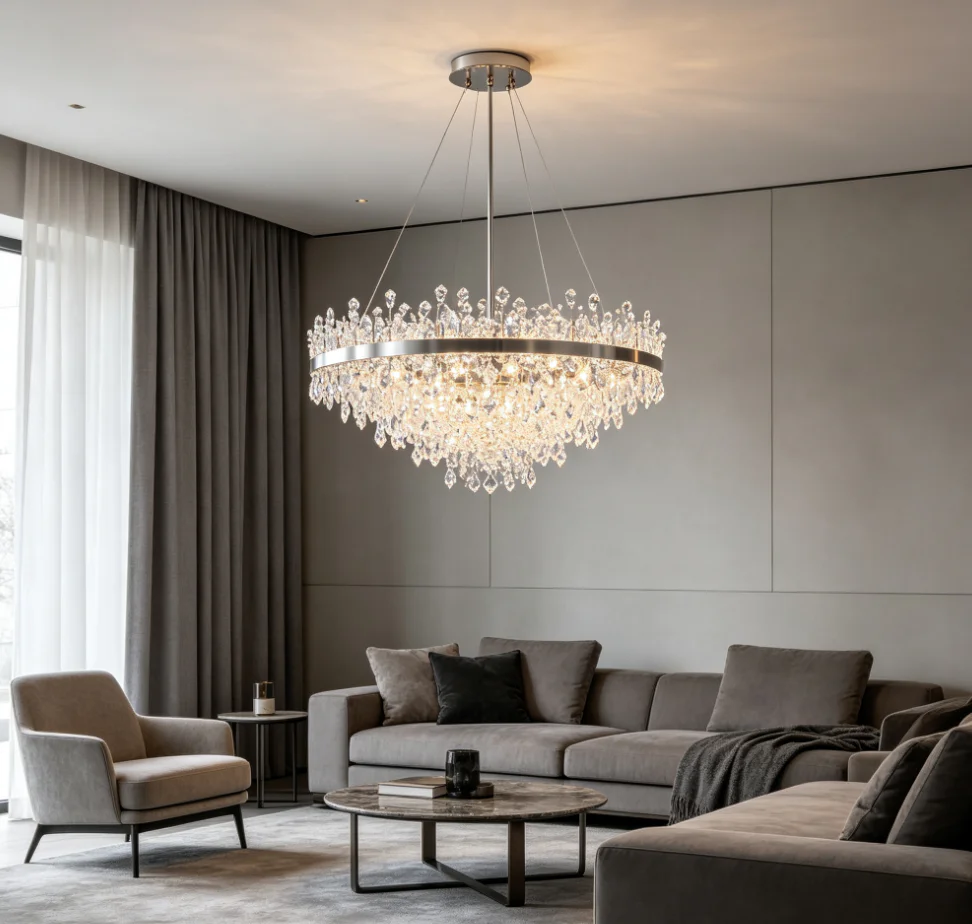
In some projects, the fixture simply needs to repeat well across several rooms, match the furniture, and remain available when another unit is needed later. In others, the lighting has to do something much more visible. It may sit above a hotel reception desk, follow the height of a staircase, or define the atmosphere of a restaurant before guests have looked closely at the tables.
That is where the difference between designer lighting and customized sculpture lighting becomes important.
The two are often discussed as if they were the same product category. They are not really solving the same problem.
Some spaces need a reliable product. Others need a focal point.
A restaurant with twenty dining tables may want pendant lights that share one shape, one finish, and one visual rhythm. The product needs to look good, but it also needs to be repeated without creating a new design problem every time. A hotel may need the same bedside wall lamp in many rooms. A home lighting brand may be building a collection that has to remain consistent across different sizes.
In those situations, designer lighting is usually the more sensible route.
The basic design has already been established. The buyer can discuss moderate changes to the size, color, material, or suspension length, but the product still follows a known structure. Procurement is easier to organize, and replacement units are less complicated to identify later.
A statement fixture in a lobby has a different responsibility. It may need to occupy a large ceiling, connect with a curved staircase, or echo the shape of a building feature. A ready-made pendant may be attractive and still look lost in the room. Making it larger is not always enough. The proportions, support structure, hanging points, and lighting position may all need to change together.
That is closer to sculpture lighting.
The design begins with the space, a sketch, a mood board, a ceiling plan, or even a loose idea such as “something branching above the stairs.” The manufacturer then has to work out how the object can actually be made, assembled, wired, packed, and installed.
There is more discussion involved. There is also more room for the final fixture to belong specifically to the project.
“Unique” is not yet a design brief
When someone says they want a unique chandelier, the next question should be: unique in what way?
The size may need to be unusual. The fixture may need to follow a certain architectural line. The brand may want a recognizable shape. Perhaps the available products all use the wrong finish, or the ceiling is too low for the original design. Sometimes the customer wants a visual reference to nature, jewelry, branches, waves, or a company symbol.
Each of these requests leads to a different development task.
A branch-like chandelier for a villa staircase is not designed in the same way as a wide ring chandelier for a hotel lobby. A group of pendants above a restaurant table may need consistent spacing and easy cleaning. A sculptural light in a gallery or showroom may be judged from several directions, including when it is switched off.
The drawing should make these expectations clearer. It may show the height, width, number of drops, ceiling plate, hanging positions, material distribution, and the way people will see the fixture from the entrance or seating area.
It should also expose the less attractive questions.
Where will the installer stand? Can the fixture be brought through the door or elevator? Is there enough space to assemble it? How will the light source be replaced? If the upper part becomes dusty, can someone reach it without dismantling half the structure?
These details do not reduce the artistic value of the design. They decide whether the design can survive outside the presentation image.
Materials behave differently when the fixture becomes large
A mixed-material light can look simple from a distance. The production discussion is rarely simple.
Glass and crystal can provide sparkle, transparency, and a strong decorative effect, particularly in hotel lobbies, restaurants, and entrance spaces. Their weight and fragility need to be considered at the same time. A large structure with many small glass parts may require careful labeling and internal protection during export.
Acrylic can be useful for layered or oversized shapes where the buyer wants a lighter visual effect. It still needs a suitable surface treatment and protection from scratches. The finished surface should be viewed under the intended light source rather than judged only from a sample lying on a table.
Brass, copper, iron, and aluminum each produce a different response to light. So do marble and alabaster. Natural stone brings variation into the fixture, which can be attractive, but the buyer should understand how much variation will appear across multiple pieces.
The finish is easy to underestimate. A warm brass surface may suit a restaurant with dark wood and soft wall colors. The same finish may look too strong against pale stone. Black metal can give a sculptural chandelier more definition, while a lighter finish may allow the decorative elements to remain visually softer.
When several related fixtures are planned, it is better to view the samples together. A wall lamp, pendant, and chandelier may all be described as having the same finish and still appear different if the surface treatment is not controlled carefully.
Custom development should earn its place
Not every project benefits from a fully customized fixture.
A standard designer pendant may already fit the room. If the ceiling, quantity, budget, and installation method are straightforward, turning it into a new development could add time and cost without improving the interior.
Customization becomes more valuable when a standard product forces too many compromises. Perhaps it is too wide for the circulation route, too short for the ceiling, too heavy for the support point, or unavailable in the material the interior requires. A custom lighting manufacturer may then adjust the dimensions, structure, light source, metal finish, or arrangement.
The change should have a reason.
For a hotel lobby or signature restaurant, the fixture may carry part of the identity of the space. A large ring, ribbon, branch, necklace, or multi-drop form can create a visual anchor that ordinary products cannot provide. In a private villa, a long chandelier beside a staircase may be developed around the actual height and movement of the house.
The same approach is less convincing in a narrow corridor or a room with heavy maintenance demands. A complicated shape may collect dust, make lamp replacement difficult, or interfere with other services in the ceiling. Novelty is not a good substitute for proportion.
Lanting Jixu Lighting lists art chandeliers, pendant lights, wall lamps, project lighting, home lighting, home decoration, and OEM/ODM development among its product and service scope. For a buyer, the useful part of this kind of cooperation is the connection between the initial idea and the finished fixture: drawings, materials, samples, production details, inspection, and shipment all need to follow the same design decision.
A statement light succeeds when it still feels right after the room is in use. During the day, it should not make the space feel crowded. At night, it should provide the intended atmosphere without uncomfortable glare. The maintenance team should understand how to look after it. The manufacturer should be able to reproduce the important details if another unit is needed later.
Choose designer lighting when consistency and repeat purchasing matter. Choose customized sculpture lighting when the architecture genuinely needs a fixture of its own. The most convincing result is not always the strangest object in the room. It is the one that could not have been placed anywhere else without losing its purpose.