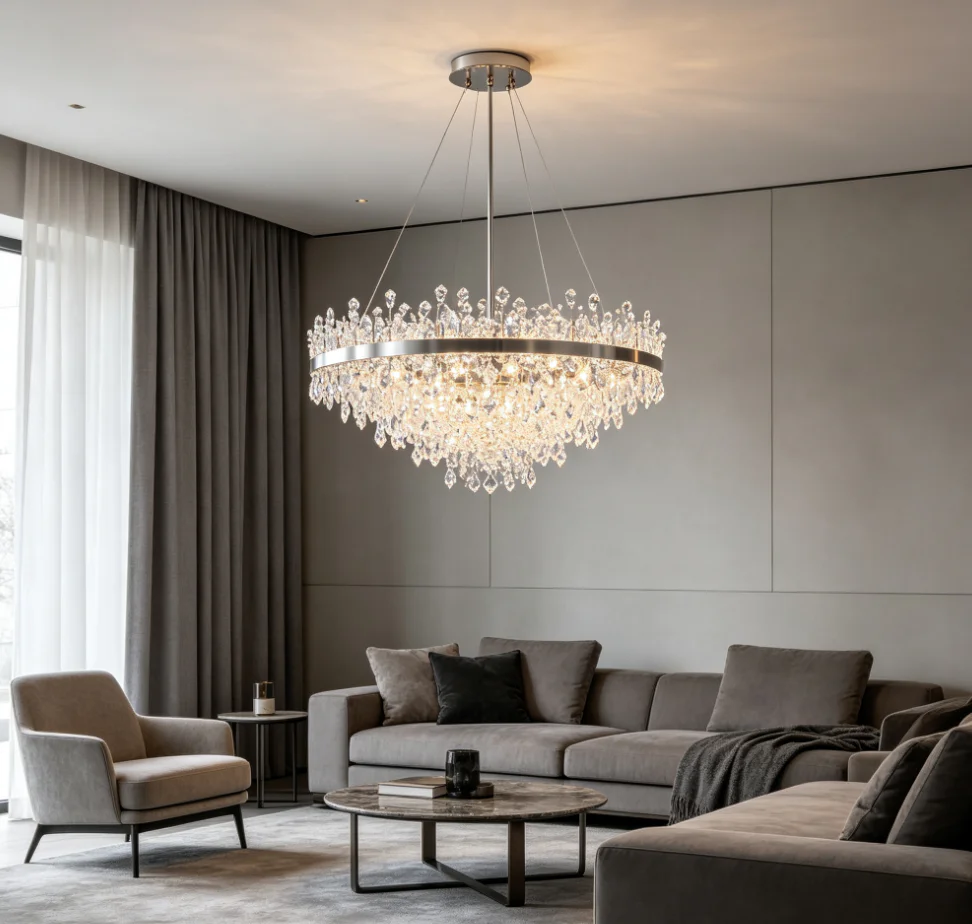
Buying Home Lighting and Decorative Pieces from China Without Losing the Collection
A new home décor collection rarely begins with one product.
A buyer may start with a pendant light, then add a wall lamp, a table lamp, a vase, a mirror, or a small metal sculpture. The products may come from different categories, but customers will often see them together in the same room, showroom, website image, or retail display.
That is where sourcing becomes more complicated.
A brass pendant and a metal sculpture may both be described as having a gold finish, but the colors can look noticeably different when they are placed side by side. A marble table lamp may match the design of a floor lamp but arrive with a different stone tone. A decorative mirror may look fine in a photograph and still need better protection than expected during export.
Buying home lighting and decorative products from China is therefore not only a catalog exercise. For many brands and importers, it is closer to building a collection.
The first order reveals how organized the supplier is
Before contacting a home lighting manufacturer, I would separate the products by purpose.
Some pieces may be core products that need to be reordered regularly. Others may be seasonal items or small decorative additions used to test a market. A chandelier, pendant light, wall lamp, floor lamp, and table lamp may belong to one collection, while vases, candle holders, mirrors, and sculptures are used to complete the display.
This distinction affects the buying decision.
A private-label brand may care about custom packaging, product labels, a logo, instruction sheets, and consistent photography samples. A distributor may want a wider range with manageable order quantities. An interior project may need several unrelated products shipped together, with quantities based on the rooms rather than on a standard retail assortment.
These buyers may all use the phrase “custom lighting,” but they are not asking for the same service.
OEM usually begins with a buyer’s own specification. The dimensions, materials, finish, packaging, and branding requirements are already defined. ODM can begin with an existing design direction or a supplier’s product development ability, followed by changes to the shape, color, size, or finish.
The difference matters when the quotation is prepared. A small color adjustment is not the same as developing a new metal structure. Adding a logo to neutral packaging is not the same as producing a completely new package. The more clearly these details are discussed, the fewer surprises appear after the first sample.
I would also decide which products must match and which products are allowed to vary. If a chandelier, wall sconce, and sculpture are intended for the same room, the metal finish may need close control. A mixed collection can have more freedom, but that choice should be deliberate.
Samples should answer a real buying question
Not every product needs a sample in the same form.
For a table lamp, the buyer may need to check the material, switch position, base stability, shade color, and light effect. For a large chandelier, a smaller section or finish sample may be enough to review the metal surface and decorative details before the full structure is developed.
The sample should have a purpose. Otherwise, it becomes an attractive object that does not help with the final decision.
Natural materials need particular attention. Marble and alabaster can vary in grain, tone, and translucency. Glass and crystal may look different depending on thickness and the way the light passes through them. Acrylic may be suitable for a large or layered design, but the buyer should examine the surface closely for scratches, uneven edges, or an appearance that feels less refined than expected.
Metal finishes should be checked beside other products in the same range. This is more useful than looking at one lamp against a white background. Warm brass, antique brass, copper, black, and brushed finishes can all change the feeling of a room. A small difference may be acceptable between separate collections and distracting within one coordinated series.
The quotation should be based on the approved details, not only on the product photograph. Dimensions, light source, voltage, driver, finish, accessories, packaging, and branding requirements need to be identified. When one supplier gives a much lower price, check whether the material thickness, internal structure, carton protection, or electrical configuration is different.
MOQ also needs careful reading. A low MOQ for a standard table lamp does not necessarily mean that a complex custom chandelier can be developed economically in the same quantity. The minimum may apply to one model, one finish, one packaging version, or the whole order.
Mixed orders can be useful for importers and online sellers, especially when the supplier handles several related product categories. They also create more opportunities for mistakes. Different models need to be labeled correctly. Cartons should be organized. Quality inspection has to cover more than one type of product.
The damage risk often begins inside the carton
A lighting product may leave the factory in good condition and still arrive damaged because the internal packaging was not designed for its shape.
Glass shades need separation. Crystal pieces need support. Long metal parts may require protection from bending or scratching. Marble and alabaster components can be heavy and fragile at the same time. Decorative sculptures, mirrors, vases, and candle holders also need suitable separation when several items share one shipment.
For lighting, appearance is only one part of inspection. The buyer may also need to check the light source, driver, voltage, switch control, mounting accessories, surface finish, loose parts, visible glue, rough edges, and consistency between matching units.
For home decoration products, the base and balance matter. A sculpture that looks stable in a product photo may wobble on a smooth shelf. A vase may need more protection around its opening and base. A mirror requires attention to corners and edge protection, not just the reflective surface.
These details become more important when the products are sold online. A damaged item creates more than a replacement cost. It can lead to customer complaints, new shipping arrangements, negative reviews, and uncertainty about whether the same product can be supplied again.
That is why I would ask the supplier how repeat orders are handled. Can the original finish be referenced? Are the packaging details recorded? Can the supplier identify the sample and production specifications later? A collection is easier to manage when the important decisions are documented instead of remembered through old messages and photographs.
Lanting Jixu Lighting presents home lighting, project lighting, and home decoration products, with public information referring to samples, mixed orders, OEM/ODM requests, custom design, packaging, and shipping support. For a brand or importer, the relevant point is not simply the size of the catalog. It is whether the supplier can connect these services to the exact products being purchased.
A first inquiry does not need to be complicated. Include the reference image, product type, expected quantity, preferred material, finish, destination country, intended use, packaging requirement, and whether the order is for resale, private label, or an interior project.
Also mark the products that must match.
That small detail can change the whole discussion. It tells the manufacturer which items belong to one visual family and which ones can be treated independently. It gives the buyer a more reliable quotation and makes sample approval easier.
The best collection is not the one with the most products. It is the one where the lighting and decorative pieces still feel connected after they arrive, are unpacked, displayed, sold, and ordered again.