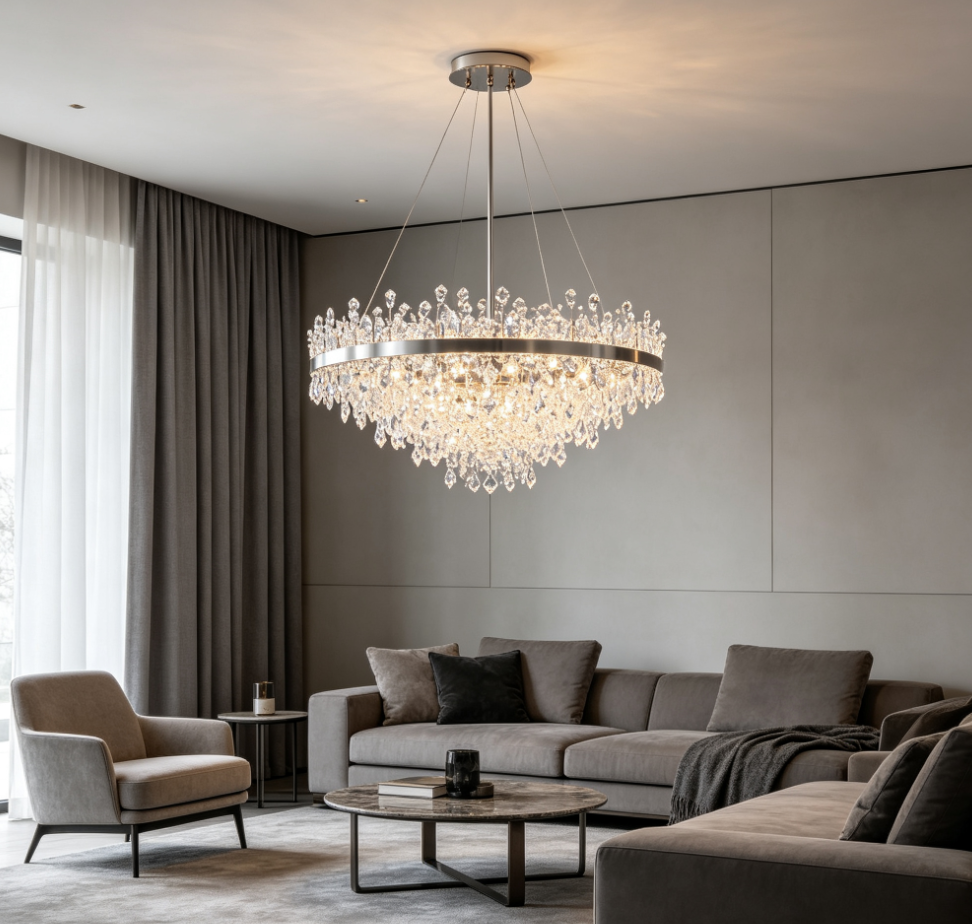
There is an awkward point in a lighting order when the designer still wants the approved fitting, but purchasing needs a lower price. The request goes to the factory, although the people sending it haven’t agreed on what, if anything, can change.
That is where a custom lighting quote can become difficult to follow. The original price is in one email. A different finish is discussed in another. Someone suggests reducing the diameter, then decides against it. By the time a revised total arrives, it takes several messages to work out which version it covers.
I’d keep the approved design on the page throughout that discussion. Ask whether the supplier can improve its price with that specification unchanged. If an alternative construction could reduce the cost, have it presented separately. Both are reasonable questions. Mixing the answers makes the saving harder to judge.
A lower price doesn’t automatically mean that something has been removed. Equally, a familiar product name at the top of the quotation doesn’t tell you that every detail remains the same.
Tell the Supplier What Can Change
Before asking for alternatives, settle which part of the design matters most to the room. This needs input from the designer, not a guess from whoever is negotiating the order.
For a fitting seen close up, the visible finish may be difficult to compromise. Somewhere else, the main concern might be the illuminated surface or the overall proportions. A concealed decorative detail could be open to discussion. The buyer doesn’t have to decide how the factory should make it, but the factory needs to understand what the client is trying to preserve.
Otherwise, it can spend time pricing an option the designer will immediately reject.
The same problem appears when a competing quotation lands in the inbox. It may genuinely be a better offer. Before using it as the target price, though, check whether it describes the version you want to buy. A brass-coloured finish says little about the metal underneath. A reference image doesn’t settle the construction, and an earlier drawing may have fewer decorative parts than the current one.
Put the two offers beside the same drawing revision. Where the descriptions differ, get an explanation in plain language. There is no need to treat the cheaper supplier with suspicion; there is also no reason to assume that matching silhouettes mean matching orders.
For an enquiry to Lanting Jixu, send the drawing, quantity, finish reference and destination together. Explain which details are fixed and where suggestions are welcome. If the budget is still under review, ask for the price of the requested design and any proposed alternative to be kept distinct.
What the First Order Includes
Reducing the number of fittings is one possible response to a tight budget. It may not produce the reduction the buyer expects if the order still needs the same development work.
A finish sample, prototype and development drawing are different things. Find out which are included rather than treating “sample” as a promise covering all three. If a sample has to reach a review location, establish whether its shipping is included too.
Where there is a tooling or development charge, ask what it pays for. A later order may have a different price, but that needs agreement. It is unwise to build a future budget around the assumption that the charge disappears, particularly if the later fitting will have a different size or construction.
Minimum quantities deserve the same sort of conversation. Does the minimum apply to a model, a finish or a packaging version? A mixed order can look substantial in total while leaving only a few pieces of each requested variation.
These questions are more useful than repeatedly asking for a percentage reduction. They may reveal a practical change the project can accept, or show that the proposed quantity and level of customization don’t fit the available budget.
Who Is Doing the Assembly?
Packing is worth discussing with the people receiving and installing the fixture. A chandelier supplied in more sections may use less shipping space, but somebody still has to assemble it. That may be perfectly acceptable. It needs to be understood before the buyer counts the change as a saving.
The assembled version has its own handling requirements. Neither arrangement wins on principle. Ask the receiving team and installer which one they can accommodate, then compare the costs on that basis.
The delivery terms need to line up as well. Two fixture prices are not directly comparable if they cover different destinations or different services. Get the exclusions stated clearly, without assuming that the number at the bottom includes every expense after the goods leave the factory.
Once an alternative is accepted, have the custom lighting quote revised to show it. Keep the corresponding drawing and sample approval with that version. The specified light source, driver where applicable and intended controls also need to remain clear; a brief description should not leave the project team guessing what it must provide.
Sometimes, after those conversations, the original fitting is still over budget and none of the proposed changes is acceptable. The designer may need to choose another fitting. That is worth discussing before everyone spends another week revising a price for a design the project cannot afford.